Plan & Plate: Streamlined Meal Planning & Recipe Management
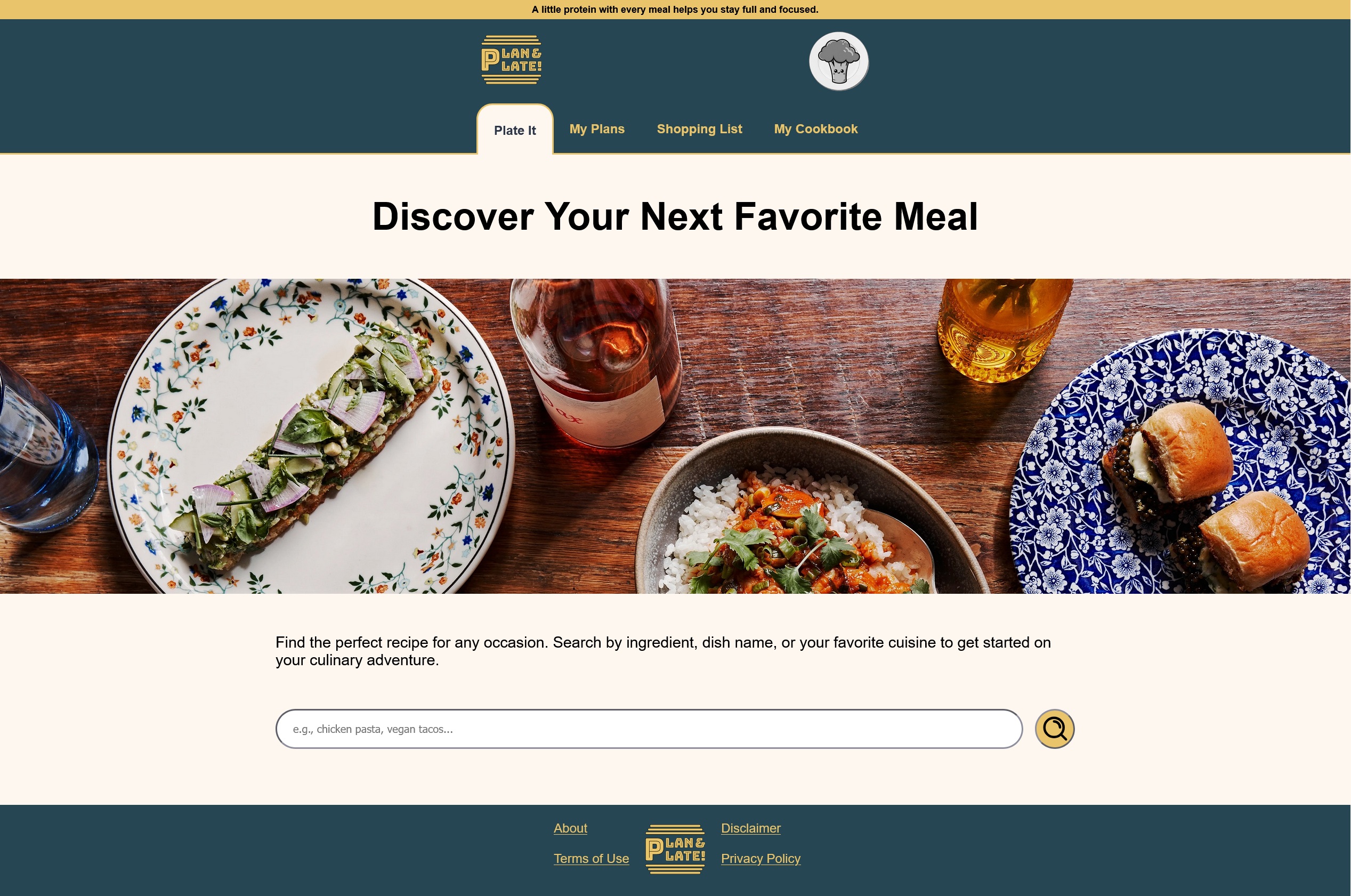
Developing "Plan & Plate" was a deep dive into the world of modern frontend frameworks and complex data orchestration. Created as a comprehensive tool for home cooks, the application serves as a one-stop shop for discovering new recipes via the Spoonacular API, managing personal recipe collections, and generating organized weekly meal plans with corresponding shopping lists.
My Role: Full-Stack Development
As the sole developer for this project, I was responsible for the end-to-end delivery of the application, encompassing everything from initial UI/UX wireframing to the architectural design of both the frontend and the supporting API.
- UI/UX & Visual Identity: I designed the interface with a focus on simplicity, creating a custom color palette and original artwork to ensure the application felt inviting and professional.
- Frontend Engineering: I built the core application using React and Vite, focusing on a component-based architecture and efficient state management.
- Custom API Development: To support data persistence, I engineered a custom RESTful API using PHP to handle user-specific data storage.
- Database Architecture: I designed and managed a MySQL database to store user-created recipes, "liked" external recipes, and meal planning schedules.
Overcoming Development Challenges
This project marked several "firsts" in my development career, presenting challenges that required both technical growth and strategic problem-solving:
- Mastering the React Ecosystem: As my first application built with React, I had to quickly move beyond static sites to understand declarative UI patterns. A major hurdle was managing the "flow" of data. Because information needed to move seamlessly between recipe searches, the weekly calendar, and the shopping list, I implemented a top-level "state" component. By "lifting state up," I ensured that all child components remained synchronized with the active recipe and the current user schedule.
- Bridging Frontend and Backend: Integrating a React frontend with a custom PHP storage solution required a clear data contract. I developed a dedicated JavaScript library to house all API calls and data transformation functions. This abstracted the complexity of the Spoonacular and PHP APIs, allowing the UI components to remain "lean" and focused solely on the user experience.
Technical Deep Dive
- React & Vite: Used for building a dynamic, high-performance user interface. The application utilizes a modular component structure where data is passed efficiently via props.
- Custom PHP API: Developed to provide a secure bridge between the frontend and the database, handling all CRUD (Create, Read, Update, Delete) operations for user data.
- MySQL: Serves as the primary data store for user-generated content, meal plan configurations, and saved recipe metadata.
- Spoonacular API Integration: Leveraged to provide users with access to a vast database of recipes, supporting advanced search functionality and detailed nutritional information.
- Data Transformation Library: A custom JS library created to standardize data shapes coming from two different API sources, ensuring consistent rendering across the app.
Project Outcomes & Achievements
Plan & Plate successfully met every objective defined at the start of the project, resulting in a fully functional tool that simplifies the transition from "what's for dinner?" to a completed shopping trip.
Top-Tier Recognition: The project received a full grade and was recognized by the professor as "Definitely the best in show," highlighting the quality of both the code and the presentation.
Proven Full-Stack Capability: I successfully demonstrated the ability to learn a new framework (React) while simultaneously building a custom backend to support it.
Seamless Integration: The application effectively coordinates data from multiple APIs and a local database into a single, cohesive user experience.
Design Philosophy
My approach to the Plan & Plate design was to create a "clean canvas" that allowed food photography to take center stage. I chose a palette of Teal and Gold—colors that are vibrant and inviting without being overwhelming.
I prioritized a "flat" navigation structure to reduce "click fatigue." For example, adding a recipe to a database or a meal plan was designed as a one-click action (using "like" or "+" icons), ensuring that the technology never gets in the way of the user’s goal.
Future Enhancements
The architecture of Plan & Plate was built with scalability in mind. My next objective is to implement a robust user authentication system. This will allow for true data segregation, ensuring that when a user logs in, they access a personalized "Digital Cookbook" and meal plans unique to their account. I also plan to add profile customization, allowing users to upload personal avatars and set dietary preferences.